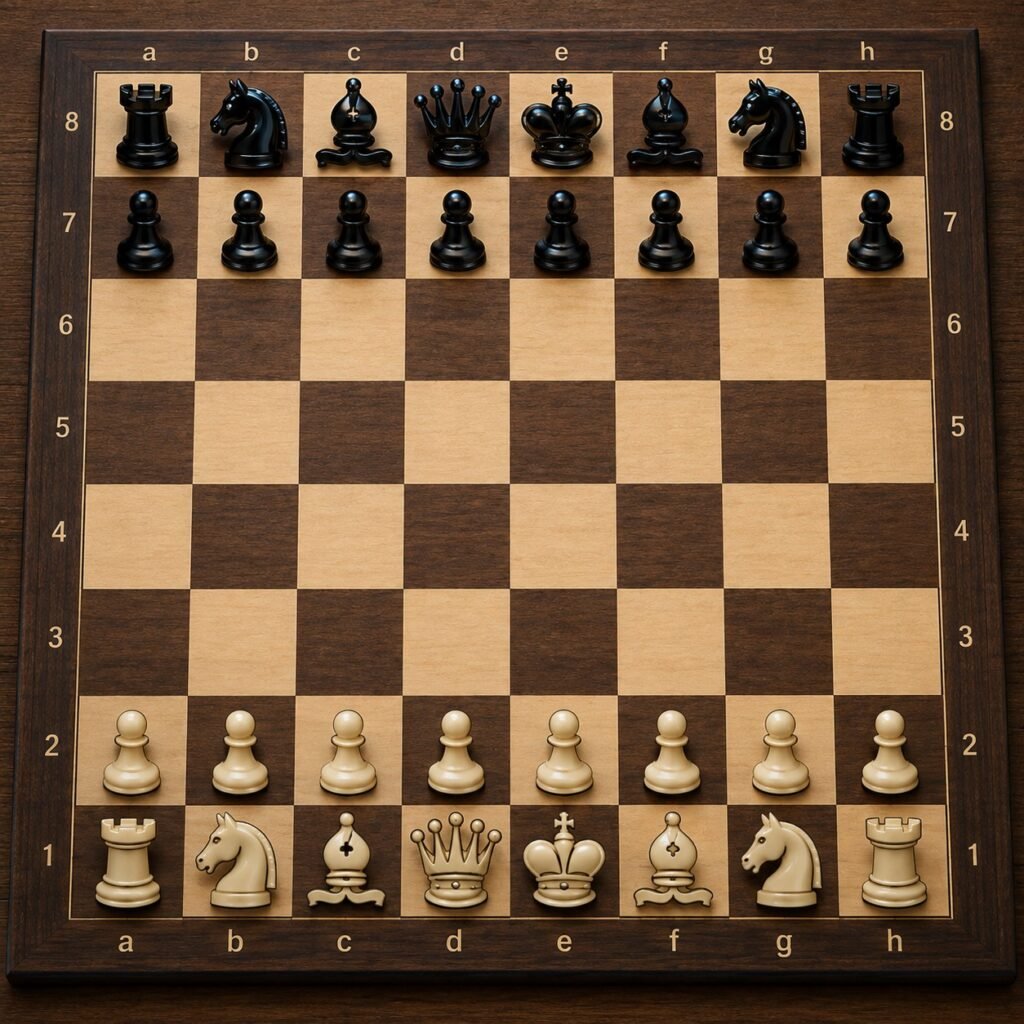
Chess can look complicated when you first see a board covered with different pieces. There are kings, queens, rooks, bishops, knights and pawns, and each one has its own way of moving. But once you understand the basic rules, the game becomes much easier to follow.
Chess is played between two players. One controls the white pieces and the other controls the black pieces. Each player starts with 16 pieces, and White gets the first move. After that, players take turns moving one piece at a time.
The goal is simple to explain: checkmate your opponent’s king. Getting there, however, requires you to think ahead, protect your own pieces, and pay attention to what your opponent is planning.
This guide explains how to play chess from the beginning, including the board setup, movement of every piece, capturing, check, checkmate, special moves, opening principles and basic strategies.
What Is Chess?
Chess is a strategy board game played on a square board containing 64 squares. The squares alternate between light and dark colors, forming an 8-by-8 grid.
Each player begins with:
- 1 King
- 1 Queen
- 2 Rooks
- 2 Bishops
- 2 Knights
- 8 Pawns
The pieces are divided into two sides: White and Black.
White makes the first move. Black then makes a move, and the players continue taking turns until the game ends.
A chess game can finish with a checkmate, resignation, draw or another result allowed by the rules.
Unlike many board games, you don’t win by simply collecting the most pieces. The position of the king is what ultimately matters.
How to Set Up a Chess Board
Before playing, the board needs to be placed correctly.
There is an easy rule that helps beginners remember the orientation:
The square in the bottom-right corner should be light-colored.
Once the board is facing the correct way, place the pieces on the two rows closest to each player.
The back row, from left to right, is:
Rook – Knight – Bishop – Queen – King – Bishop – Knight – Rook
The eight pawns go directly in front of these pieces.
There is another useful rule for remembering where the queens belong:
The queen goes on her own color.
So the white queen starts on a white square, while the black queen starts on a black square.
The official Laws of Chess specify the 8×8 board, the starting arrangement and the orientation of the board.
Once everything is in place, the game is ready to begin.
How the Chess Pieces Move
Learning how the pieces move is probably the most important part of learning chess.
Each piece has its own movement pattern, and understanding these patterns will make the rest of the game much easier
The King
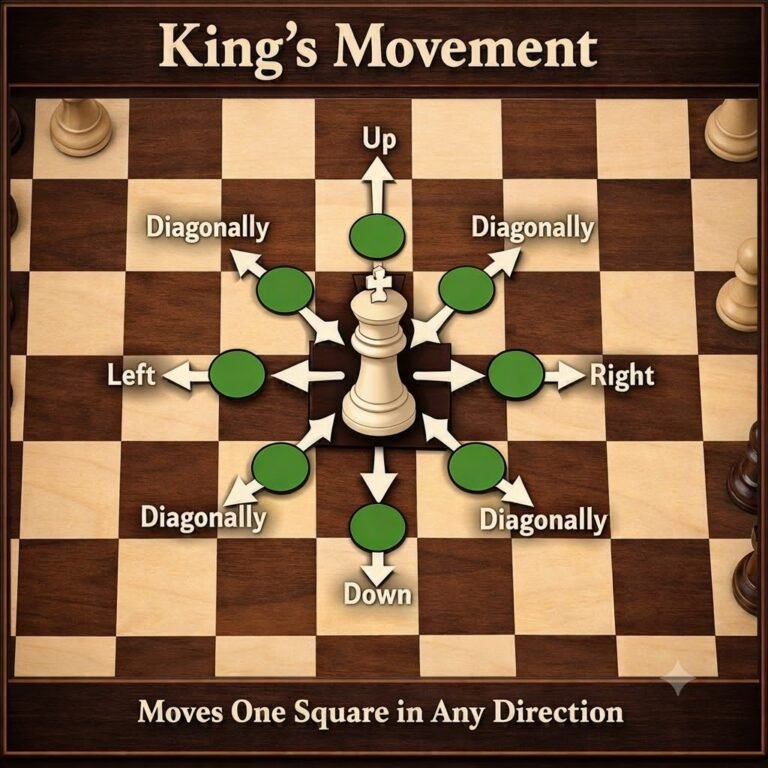
The king can move one square in any direction.
It can move:
- Forward
- Backward
- Left
- Right
- Diagonally
There is one very important restriction: the king cannot move onto a square where it would be under attack.
The king is not normally a powerful attacking piece, but it is the most important piece on the board. If it becomes checkmated, the game is over.
Because of this, keeping your king safe should always be part of your thinking.
The Queen
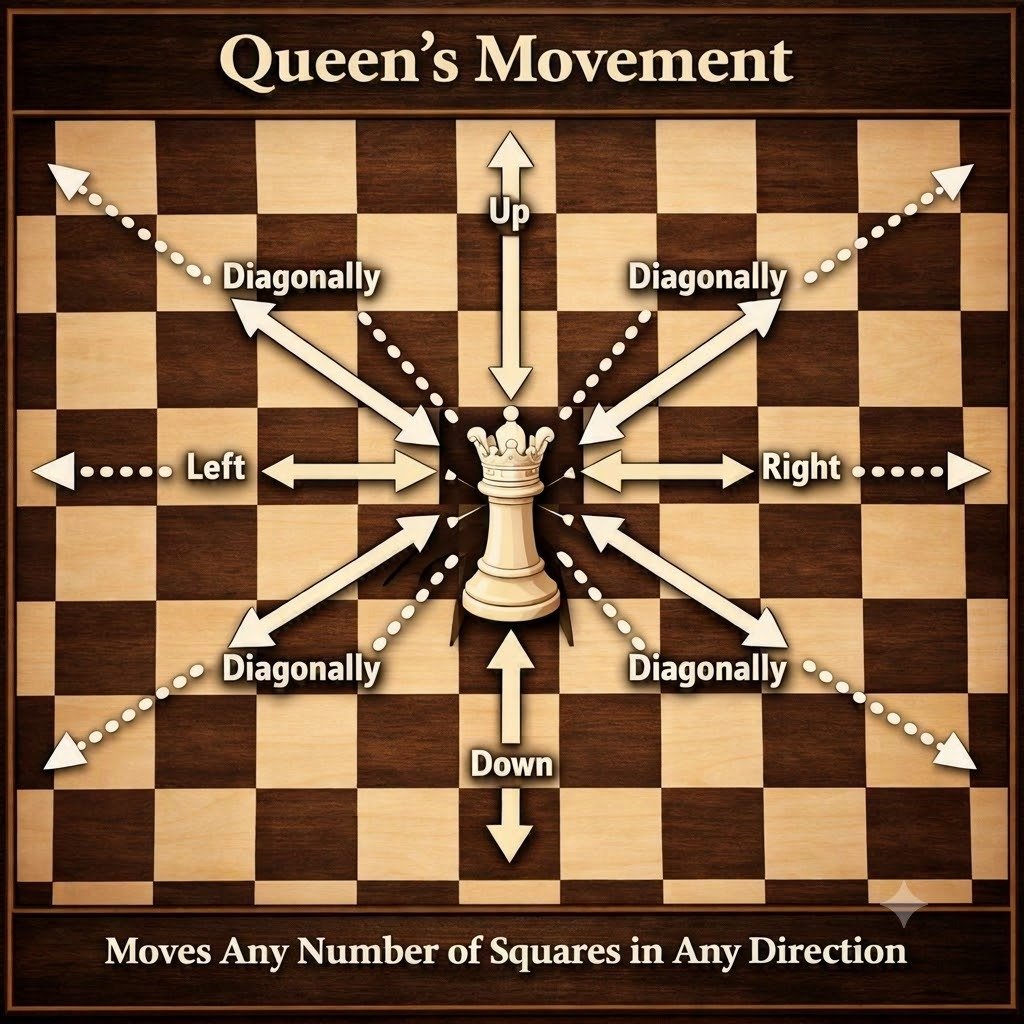
The queen is the most powerful ordinary chess piece.
It can move any number of squares in:
- Horizontal directions
- Vertical directions
- Diagonal directions
As long as there is no piece blocking its path, a queen can travel across a large part of the board.
The queen is powerful, but that doesn’t mean you should rush it into the game. A queen that comes out too early can sometimes become a target for the opponent’s developing pieces
The Rook
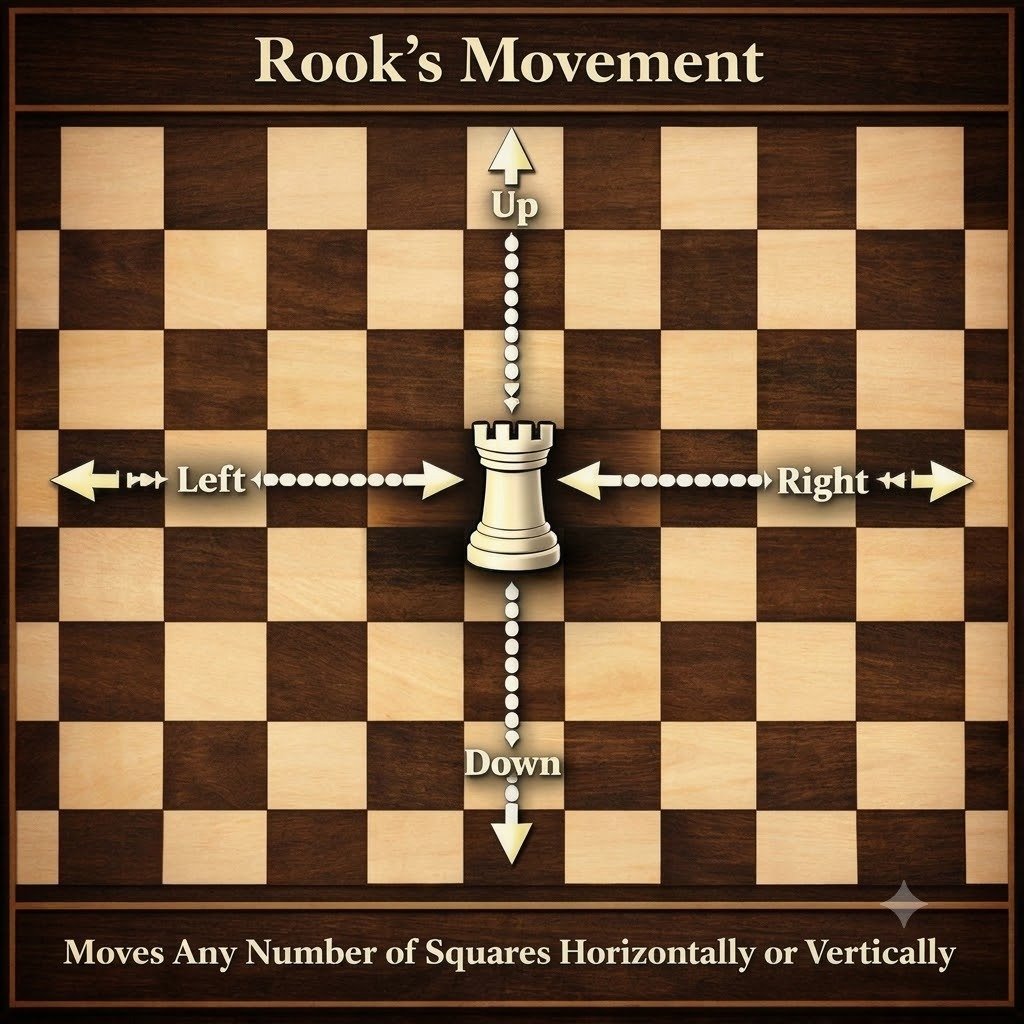
Each player begins with two rooks.
A rook can move any number of squares horizontally or vertically.
It cannot move diagonally.
Rooks are particularly useful when files or ranks become open because they can travel long distances without being blocked by pawns.
As the board becomes less crowded, rooks often become increasingly active.
The Bishop
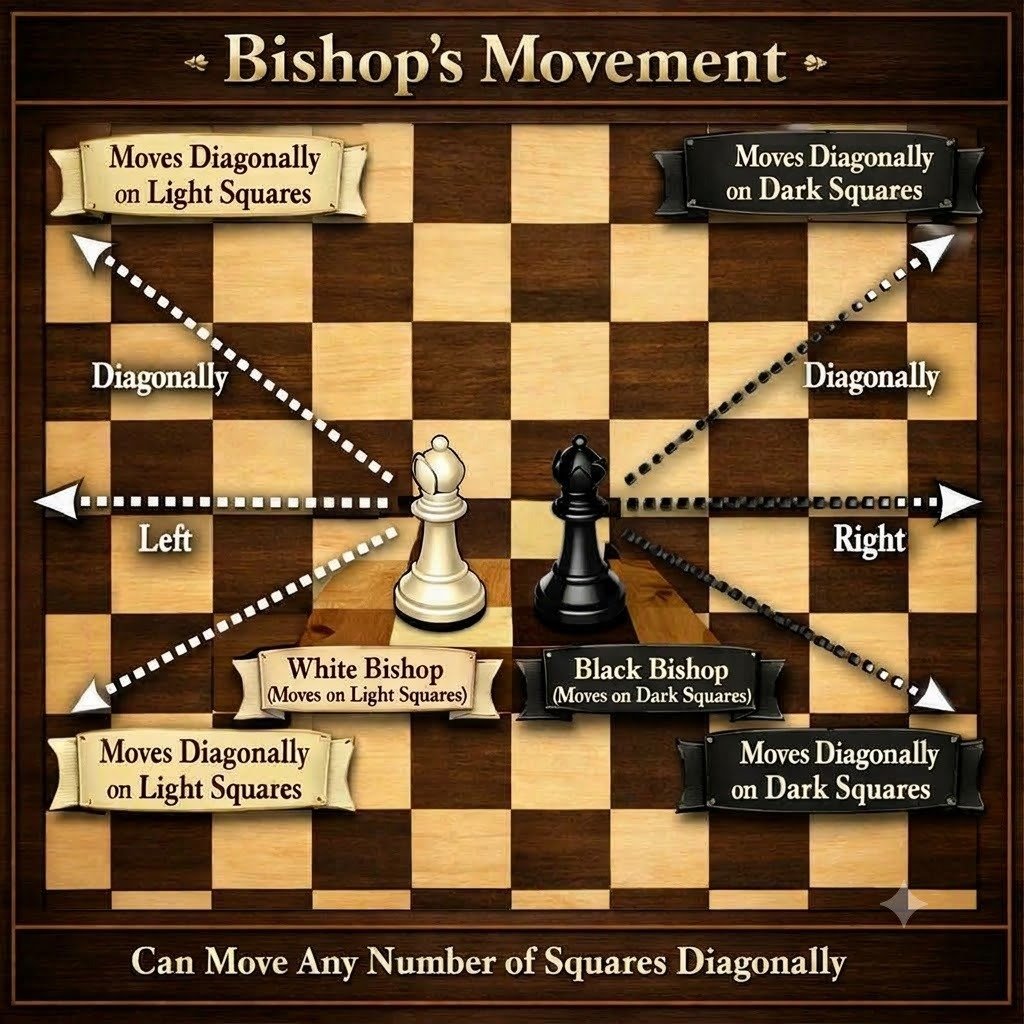
Each side has two bishops.
A bishop moves diagonally and can travel across as many squares as are available on that diagonal.
There is an interesting feature of bishops: a bishop always remains on the same color of square.
If a bishop begins on a light square, it will continue moving only on light squares. A bishop that starts on a dark square remains on dark squares.
This makes having two bishops useful because together they can influence both colors of squares.
The Knight
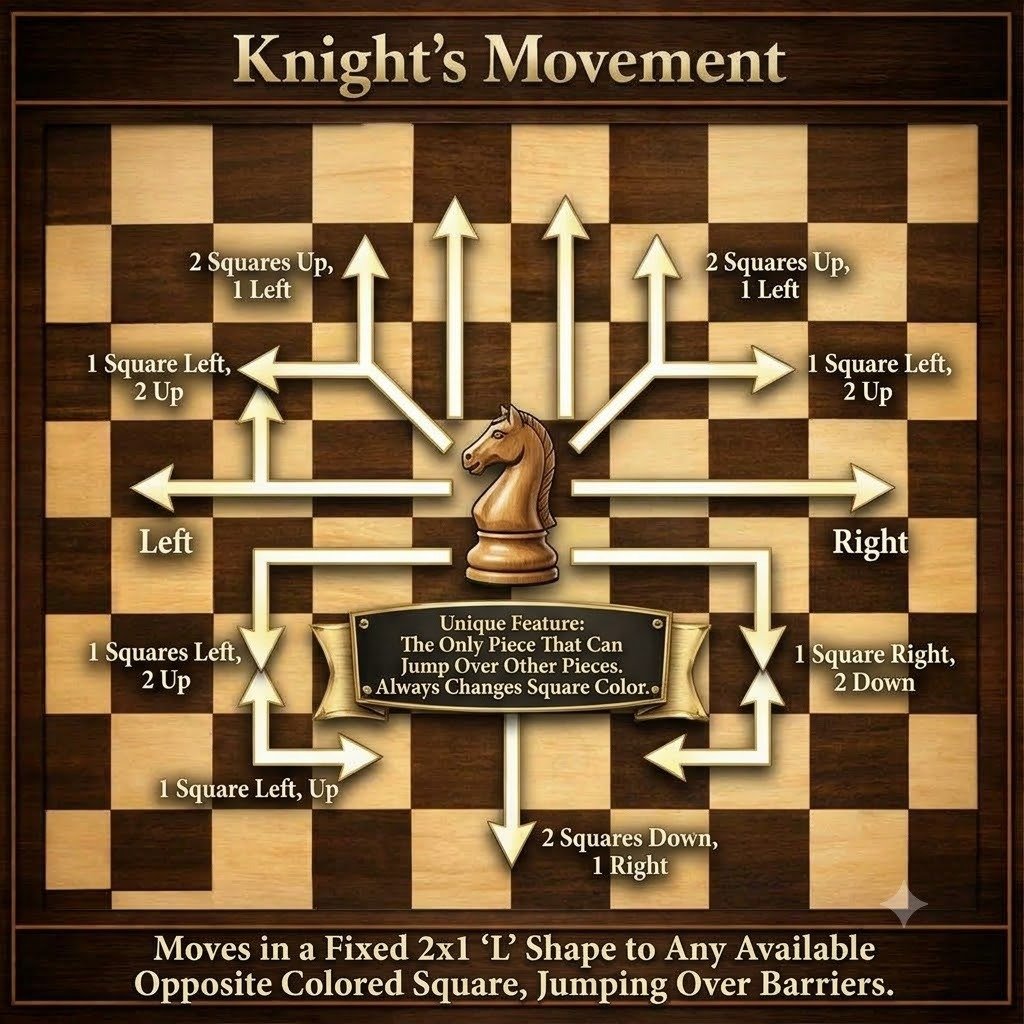
The knight is usually the piece beginners find most unusual.
It moves in an L-shaped pattern.
A knight can move:
- Two squares in one direction and one square to the side, or
- One square in one direction and two squares to the side.
The knight has another special ability: it can jump over other pieces.
That makes it different from the bishop, rook and queen, which normally cannot jump over pieces.
Knights can be especially useful in positions where the board is crowded.
The Pawn
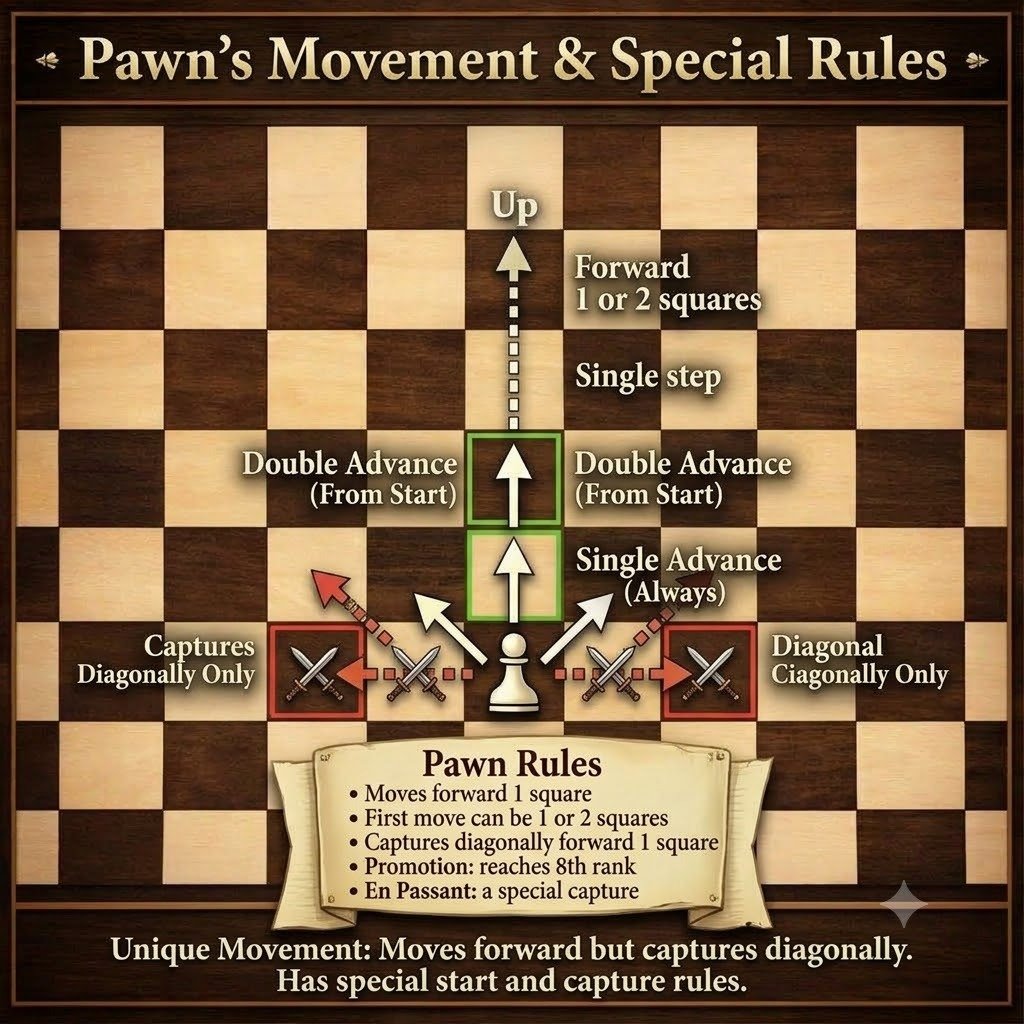
Pawns are the smallest pieces, but don’t underestimate them.
Each player begins with eight pawns.
A pawn normally moves one square forward. On its first move, it can move one or two squares forward if the path is clear.
Pawns capture differently from how they move. They capture one square diagonally forward.
A pawn cannot normally move backward.
Because pawns cannot go backward, moving one can have a permanent effect on your position. This is why experienced players often think carefully before making important pawn moves
How Capturing Works
Capturing is one of the basic actions in chess.
If one of your pieces can legally move onto a square occupied by an opponent’s piece, you can capture that piece. The captured piece is removed from the board.
For example, if your rook has a clear path to an opponent’s bishop, the rook may be able to capture it.
However, there is an important rule beginners need to remember:
You cannot make a move that leaves your own king in check.
So even if a capture looks attractive, it may not be legal if your king becomes exposed as a result.
This is one reason chess requires more thought than simply looking for pieces to capture.
What Is Check?
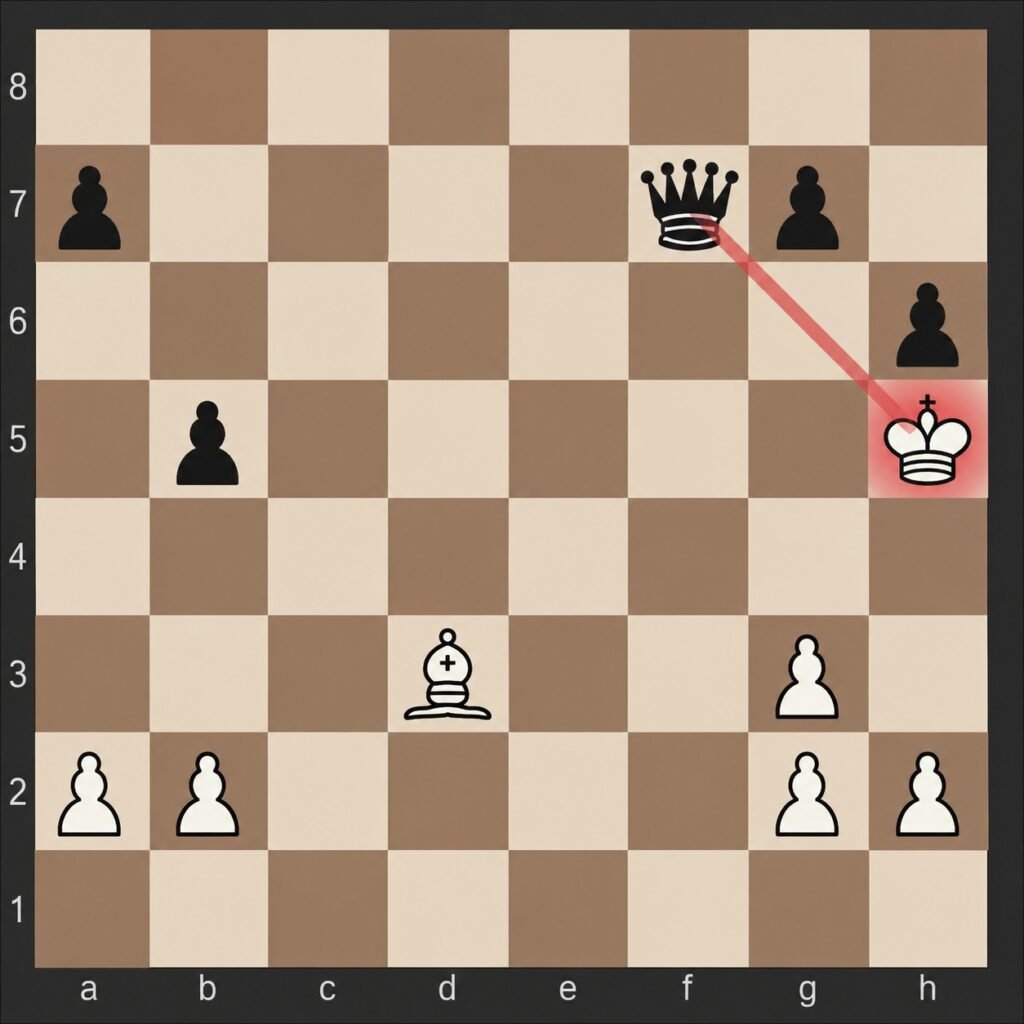
A king is in check when an opponent’s piece is attacking it.
For example, imagine a queen is attacking the king along an open file. The king is then in check.
When your king is in check, you must deal with the threat immediately.
You may be able to:
- Move the king to a safe square.
- Capture the attacking piece.
- Block the attack with another piece.
The exact solution depends on the position.
The rules of chess do not allow a player to make a move that leaves their own king under attack.
What Is Checkmate?
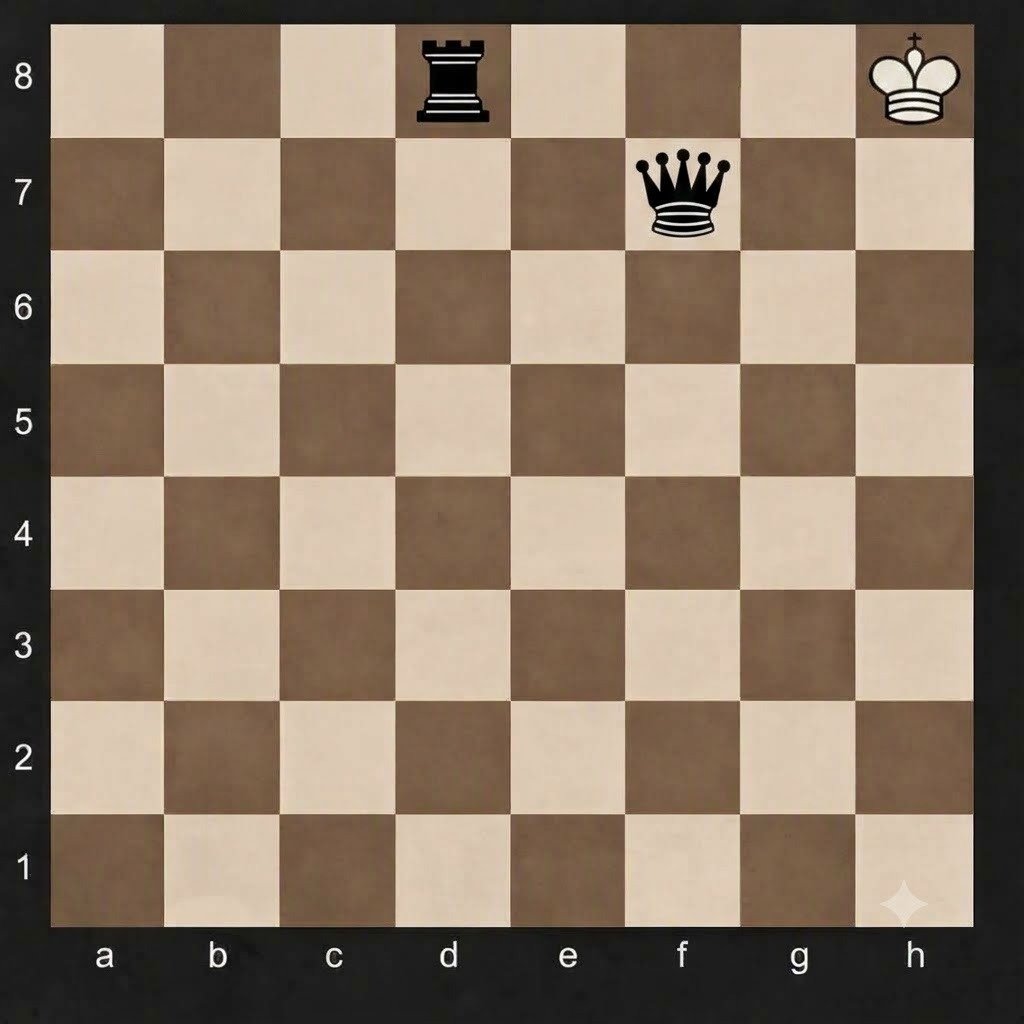
Checkmate is the moment when a chess game is won.
A king is checkmated when it is under attack and there is no legal move available to escape the attack. The player delivering checkmate wins the game.
This means you don’t actually capture the opponent’s king.
Instead, you create a position where the opponent has no legal way to save it.
For beginners, this distinction is important:
Check = the king is under attack.
Checkmate = the king is under attack and cannot escape.
Once checkmate occurs, the game is finished.
What Is Stalemate?
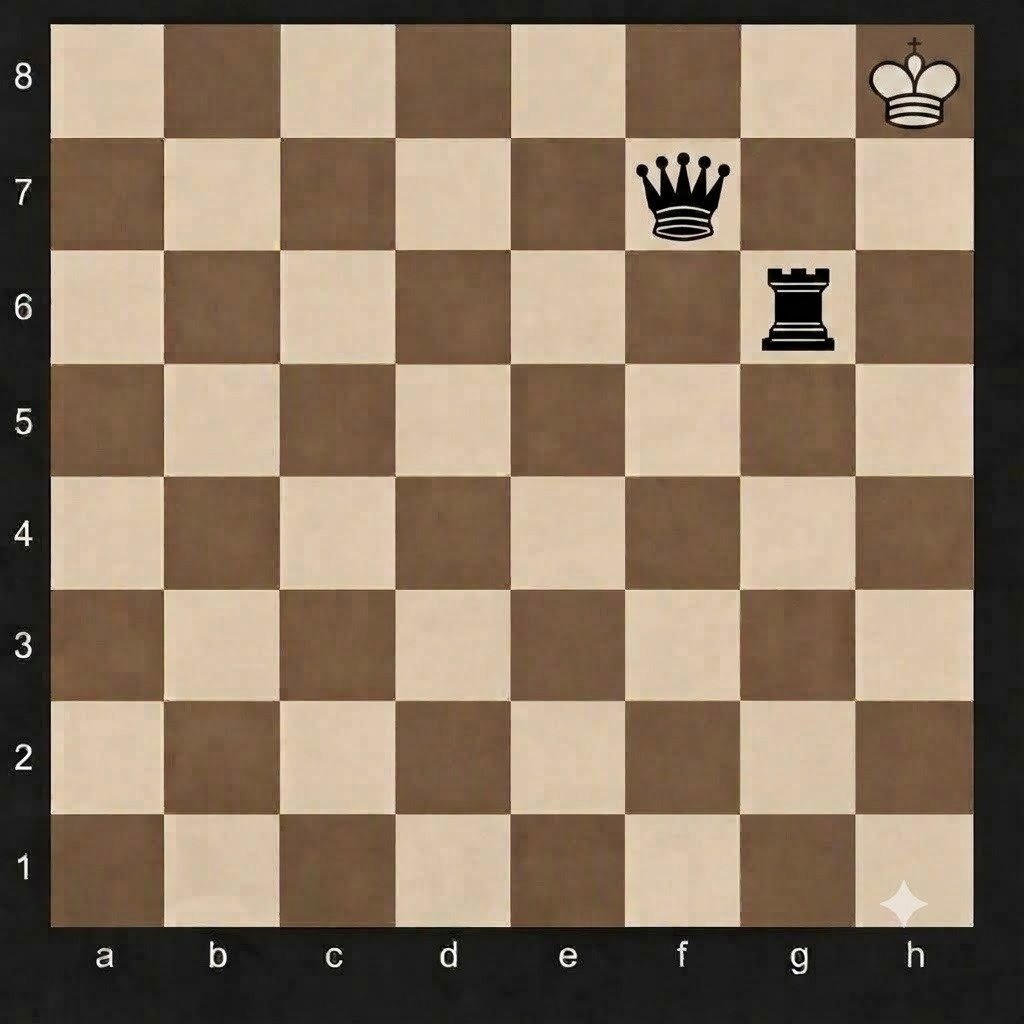
Stalemate can be confusing when you first learn chess.
It happens when a player has no legal move available, but their king is not in check.
The result is a draw.
This can happen when one player has a huge material advantage but accidentally leaves the opponent with no legal moves.
For that reason, a winning player needs to pay attention not only to the opponent’s king but also to the opponent’s available moves.
Special Moves in Chess
Chess has a few rules that don’t follow the normal movement patterns.
The most important ones for beginners are castling, pawn promotion and en passant.
Castling
Castling is a special move involving the king and a rook.
During castling, the king moves two squares toward the selected rook, and the rook moves to the square immediately next to the king.
There are rules that must be satisfied before castling is legal.
For example, the king and the relevant rook must not have moved earlier. There also cannot be pieces between them, and the king cannot castle through or onto an attacked square.
Castling is useful because it can move the king toward safety while bringing a rook into a more active position.
There are two types:
- Kingside castling
- Queenside castling
Pawn Promotion
A pawn that reaches the opposite end of the board is promoted.
It can become:
- Queen
- Rook
- Bishop
- Knight
The player chooses which piece the pawn becomes.
Most of the time, a queen is the obvious choice because of its power, but there are positions where another piece can be more useful.
Promotion is one of the reasons pawns can become extremely important in an endgame.
En Passant
En passant is one of the less common chess rules.
It involves a pawn that has just moved two squares from its starting position and ends up beside an opposing pawn. Under the specific conditions of the rule, the opposing pawn can capture it as though it had moved only one square.
The opportunity is available only immediately after the qualifying two-square pawn move.
You may not see en passant in every game, but it is worth knowing about if you want to understand the complete rules of chess.
The Three Main Phases of a Chess Game
A typical chess game can be thought of in three broad stages:
Opening → Middlegame → Endgame
Each stage requires a somewhat different approach.
The Opening
The opening is the beginning of the game.
Your main priorities should usually be:
- Develop your pieces.
- Fight for control of the centre.
- Keep your king safe.
- Avoid unnecessary moves.
You don’t need to memorize a huge opening book to start playing.
Understanding the basic ideas behind an opening is usually more useful for a beginner than remembering ten moves without knowing why they are played.
Note:- most popular chess opening
The Middlegame
After the opening, the game often becomes more complicated.
Pieces are developed, exchanges begin happening, and both players start looking for tactical opportunities.
This is where ideas such as:
- Forks
- Pins
- Skewers
- Discovered attacks
- Double attacks
- Open files
- Weak squares
become important.
The middlegame is often where players have to create a plan rather than simply follow opening principles.
If you want to learn more about improving your decision-making and playing stronger positions, check out our guide to [the best chess strategies to improve your game].
The Endgame
The endgame begins when many of the pieces have been exchanged and only a smaller number remain.
The king becomes much more active during this stage.
Pawns also become extremely important because a pawn that reaches the final rank can be promoted.
Some basic endgames are worth learning early, including:
- King and queen versus king
- King and rook versus king
- King and pawn endings
- Basic opposition
- Pawn promotion techniques
You don’t need to master every endgame immediately. Start with the simple ones and build from there.
Basic Chess Strategy for Beginners
Knowing how the pieces move is enough to play chess, but it isn’t enough to play well.
The next step is learning a few basic principles.
Control the Centre
The central part of the board is important because pieces placed there can often influence many different squares.
Opening moves such as e4 and d4 are popular partly because they help fight for central control.
You don’t have to occupy the centre with pawns every time, but you should understand why central control matters.
Develop Your Pieces
Try to bring your knights and bishops into useful positions instead of leaving them on their starting squares for too long.
Good development gives your pieces more options and helps you prepare for the middlegame.
Protect Your King
A king sitting in the centre can become vulnerable once the opposing pieces become active.
This is one reason castling is such an important part of many openings.
Don’t Move Without a Reason
Before making a move, ask yourself what the move actually accomplishes.
Are you attacking something?
Are you improving a piece?
Are you defending a weakness?
Are you preparing a plan?
Sometimes a quiet move is much better than an exciting-looking attack.